Of the New Mexico NPS sites I visited on this journey, Bandelier National Monument was my favorite.
I ended up camping there for a couple nights. The campground was basic – firepits, shared potable water pumps, bathrooms, and dumpsters. A large group of kids, on a field trip I assumed, was staying there. I miss interacting with kids so it was fun to watch and listen to them; they were having a ball.
The visitor center area is unusually big for a relatively small NPS site. In addition to indoor exhibits there is a big gift shop including a separate room with high-end jewelry and pottery. There is also a restaurant.
The actual monument, which preserves ancestral Puebloan homes, was very interesting. One can walk amongst the ruins–and even inside them, in some cases. The grounds were well done and well maintained. Guided tours of the site were available, too. Or, another option is to use the self-guided tour in the NPS app.
(After clicking the first photo in the gallery for a slideshow, click the “i” for fullcaptions/more info).
From Rim Rock, I headed to Phoenix for several days before heading to my seasonal job in Colorado. Since I’ve been on the road full-time, I enjoy big cities only when I need to run multiple errands. In this case, I bought a new truck topper, got some work done on my truck and on my trailer, took Sadie to the vet (twice, it turned out), got a haircut (once again, twice after an alarming botched first cut), made a big Walmart supply run for the summer, etc., etc. This was the first time I had spent significant time in Phoenix. It’s a big and busy place. I was happy to get all my chores done but was also glad to see it in my rearview mirror.
Having done some research, I next headed for destinations in northern New Mexico with continually increasing elevations. The reason being that I had been at only 1,000ft in Phoenix but was headed to 9,400ft for the summer! In order to avoid any altitude-related sickness, I decided to “stair-step” the approach to my Colorado goal. It worked well as I had no significant reactions after my arrival later.
The first place I went was El Morro National Monument which had served as an oasis for travelers many years ago and includes many inscriptions and petroglyphs as well as Puebloan ruins. For reasons I will not relate here, however, I stayed only briefly, so I will need to re-visit this National Park location in the future to explore everything it has to offer.
Next was Valles Caldera National Preserve, a 14-mile wide circular depression created by a volcanic eruption, which I was able to explore. While this site was interesting to see, there wasn’t a great deal to do on the two overcast days I was there. (I had originally arrived late in the afternoon one day and did not know they were closing soon after, so I came back the next day. I easily found a nearby national forest camping spot where, incidentally, it snowed. Snow in May – an unusual phenomenon for this mid-western/southern gal!). Back at Valles Caldera, I went through the small visitor center/gift shop and did a self-guided tour of nearby buildings and structures, reading signage along the way. I also enjoyed the area scenery and quite a large community of prairie dogs! There were some hiking opportunities on which I passed because of the inclement weather.
(After clicking the first photo in the gallery for a slideshow, click the “i” for full captions/more info. You may need to scroll down to see the captions.).
Camping in the Rim Rock area has always been enjoyable with its beautiful scenery and ample hiking opportunities. I have lost count of how many times I’ve stayed here, so I was surprised to stumble on a better camping spot than on previous occasions – better signal and away from the road plus ample room for all our rigs.
We enjoyed a full moon while here and, while visiting a nearby creek, Sadie (accidentally) enjoyed her first dog paddling adventure.
We also visited the nearby National Park site, Montezuma Castle National Monument, which I recommend. It’s a five-story “Southern Sinagua people” cliff dwelling on a limestone cliff. Visitors have the opportunity walk around and climb in the dwellings at various points.
(After clicking the first photo in the gallery for a slideshow, click the “i” for full captions/more info).
The 63 “main” U.S. National Parks have long been of interest to me but a while back, I also began seeking out the smaller NPS sites such as battlefields, national monuments, recreation areas, seashores, etc. Visiting them has been interesting, fun, and educational.
This occasion included experiencing two such sites with a couple friends, Wupatki National Monument (a Pueblo center of trade & culture) & Sunset Crater Volcano National Monument (whose name is self-explanatory)–both near Flagstaff, AZ. I was glad to finally visit these because I had passed by them on several previous occasions. In addition to the grounds, both had good visitor centers where I picked up my usual small keepsakes.
Circumstances took us back to Wupatki Visitor Center a second time where we lucked out as a group of area roadster enthusiasts had stopped by in their amazing vehicles. What a treat! I enjoyed seeing and photographing these unique antique machines.
(After clicking the first photo in the gallery for a slideshow, click the “i” for full captions/more info).
This was my second time to the South Rim of the Grand Canyon. After my first time here, I made mental notes about places I didn’t get to that I wanted to see on my next visit. These included Kolb Studio and the Desert View Tower–both of which I was able to explore in addition to viewing the awesome Canyon.
This brings to mind something I have thought of several times in the past and have expressed to others: I feel very lucky as a nomad to RE-visit national parks and other nationally known locations again and again. While at such places, I see many folks who are typically making their one and only visit. It is not lost on me that I have the unique opportunity to return to see missed areas, to visit in different seasons, or simply to enjoy these exceptionally beautiful sights over and over.
The Kolb Studio was not what I expected. I thought it would be filled with the photography and equipment of the famous Kolb brothers, known for images of early Canyon visitors and for unique photos sometimes taken from risky vantage points. It did have some of their photography, but it was mostly a gift shop and a gallery of other artists’ works. That was a little disappointing, but I enjoyed what I did get to see of their work. The Studio building itself, perched on the edge of the Canyon near the well-known Bright Angel TH, was also interesting.
The Desert View Tower was worth the visit. Built in 1932 (the year of my parents’ birth, it so happens), it includes replicas of Native American building, art, petroglyphs, etc., and provides the highest viewpoint on the South Rim. Included in the area are informative kiosks and signage, the obligatory gift shop, food and drink (in other buildings), and restrooms.
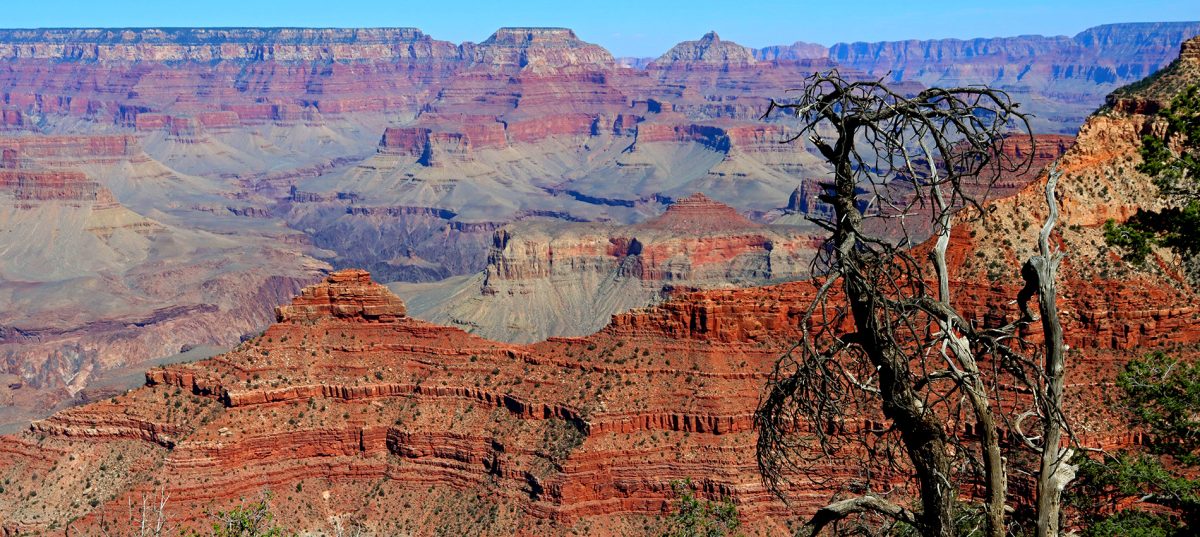
It is always a treat to see the wonder of the Grand Canyon. It never looks real to me; it’s unfathomable. Yet, I love photographing it and trying to capture unique images. Again, I feel blessed to have visited it multiple times–twice to the South Rim; once, to the North, before the recent devastating fire. I hope all who are reading this get to visit.
(After clicking the first photo in the gallery for a slideshow, click the “i” for full captions).
Dispersed camping along American Girl Mine Road, better known as “AGM” amongst nomads, is good in the winter. It is about 20 miles west of Yuma (in southern California), so it’s not a good summer destination, unless you’re a snake, lizard, or scorpion.
I helped a little with a “Homes on Wheels Alliance” caravan here (a group camp set up every couple months or so). Except for some wind, we had nice weather. There was a surprising number of wildflowers, which is always of interest to me.
After the chaos of January in Quartzsite, Arizona (about which I did not post), camping in the quiet of Palm Canyon about 20 miles south was very welcome. Miscellaneous photos follow.
Although I am not a desert person, since I have to spend each winter in its warmth, I try to look at the positives. Among those are the beautiful light and the clear night skies, illustrated in this photo set.
There is a great deal of dispersed camping in southern California (“Big River” community) just across the Colorado river from Parker, Arizona. Parker is a small town but has most all needed amenities. After I stayed in this area, I headed to Bouse, Arizona, with folks I met at Big River. I had been by Bouse a couple times but had never camped there. One must go there already well-supplied since amenities are few, but the area is beautiful and the hiking opportunities abundant and interesting.